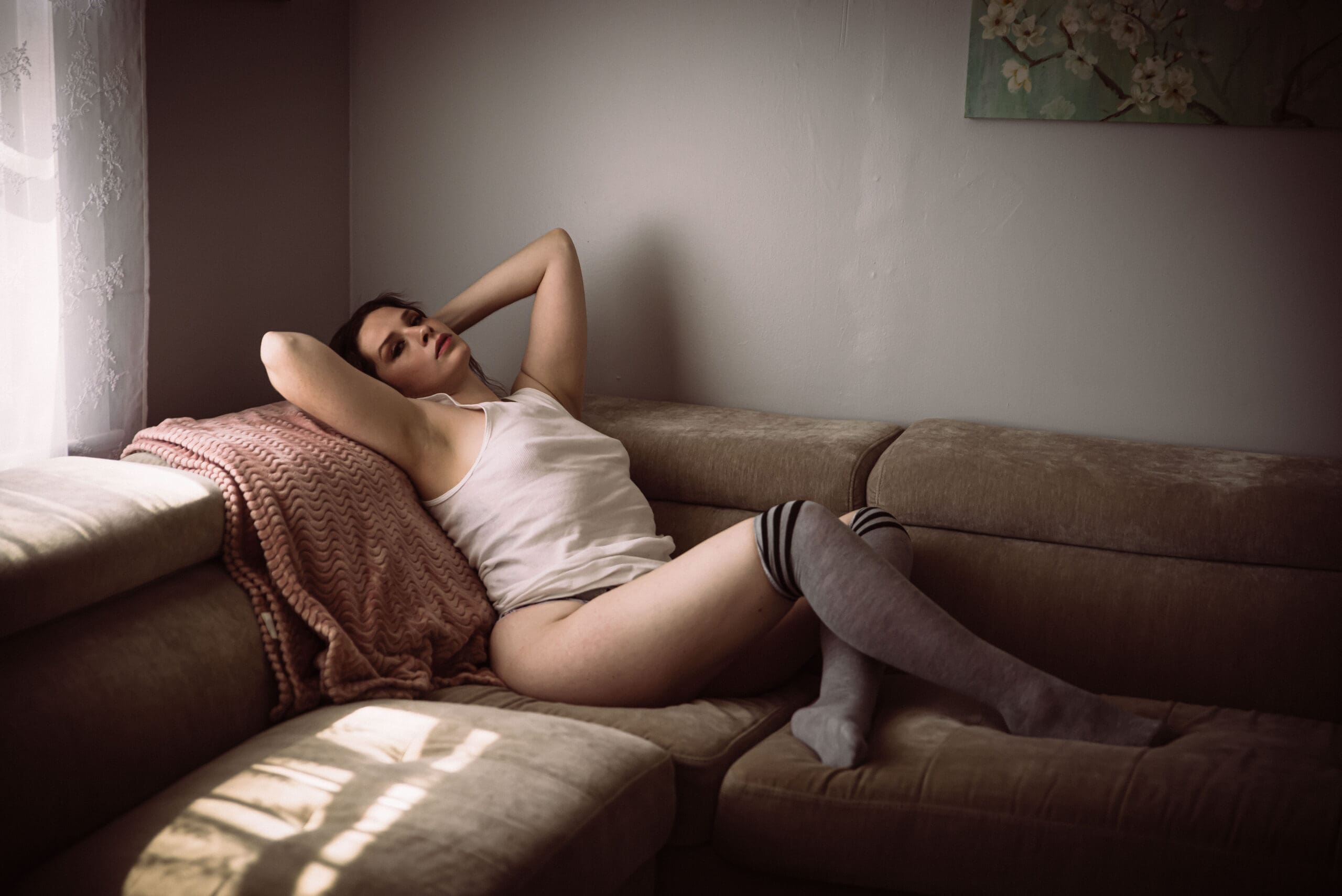
Someone pulls out a camera, and suddenly you don’t know what to do with yourself.
You become aware of your hands. You wonder whether you’re standing strangely. You try to arrange your face into something that looks natural, which somehow makes you feel even less natural.
You might laugh, look away, hide behind someone else, or immediately offer to take the picture instead.
And if someone tells you that you look beautiful, you may still feel an overwhelming urge to see the photograph so you can determine whether they’re telling the truth.
For some people, being photographed is genuinely uncomfortable. It isn’t necessarily vanity, a lack of confidence, or an unwillingness to have fun. Sometimes, the camera brings an entire collection of thoughts and feelings about appearance to the surface.
So why can something as ordinary as having your picture taken feel so vulnerable?
Being Photographed Makes Us Aware of How We’re Seen
Most of the time, we experience our bodies from the inside.
We know how we feel. We know how we’re moving, what we’re thinking, and what we’re doing. We don’t spend every waking moment observing ourselves from the outside.
A camera changes that.
The moment someone points a lens toward us, we become aware that we’re being observed. We may start thinking about how we look rather than what we’re doing.
Are my arms in a weird position? Is my stomach showing? What does my face look like? Am I smiling normally?
Instead of simply participating in a moment, we begin imagining how that moment will look to someone else.
This shift in perspective can make even a casual photograph feel like a performance.
And the more concerned we become with how we’re appearing, the harder it can be to relax.
We Don’t Always Recognize Ourselves in Photographs
There’s another reason photographs can feel uncomfortable: the person we see in an image may not match the person we recognize in our minds.
We are accustomed to seeing ourselves in mirrors, where our image is reversed. We’re also familiar with our own expressions, movements, and mannerisms from a first-person perspective.
A photograph presents something different. It’s a fixed image, captured from someone else’s position, at one particular moment.
That image may feel unfamiliar.
You might be surprised by the way your smile looks, the angle of your face, or the shape of your body in a particular photograph. You may find yourself wondering whether that’s really what you look like to everyone else.
This doesn’t mean the photograph is a more accurate representation of you than your own perception. It’s simply a different representation.
A photograph captures one moment, from one perspective, under particular conditions. It cannot communicate the entirety of what it means to be you.
If you’ve ever wondered why you hate seeing pictures of yourself, there’s a related but slightly different experience worth exploring: sometimes the discomfort begins before you ever see the finished photograph.
The Camera Can Bring Our Insecurities to the Surface
Most of us have areas of our appearance that receive more attention than others.
Maybe you dislike your profile. Maybe you’re uncomfortable with your arms, your stomach, or the way your face looks when you’re laughing. Perhaps you’ve spent years trying to conceal certain features in photographs.
When a camera appears, those concerns can become much more prominent.
You may begin adjusting your posture, pulling at your clothing, turning your body, or trying to position yourself in a way that minimizes the features you’re self-conscious about.
Some of these habits are so familiar that we barely recognize them as attempts to manage our appearance.
But they can make being photographed feel like work.
Rather than enjoying the experience, you’re concentrating on controlling how much of yourself is visible.
And that can be exhausting.
We’ve Learned to Think of Photographs as Judgments
Photographs are often treated as evidence of how attractive, confident, successful, or happy someone is.
We look at pictures of other people and make assumptions about their lives. We compare our appearance to theirs. We evaluate our own photographs against carefully selected images we see online.
It’s easy to begin treating every photograph as a kind of test.
Did I look good? Did I photograph well? Is this one worth keeping? Would I let anyone else see it?
When photographs become something we use to evaluate ourselves, it’s understandable that having them taken might feel uncomfortable.
This is connected to the larger process of how body image develops and the experiences that shape how we see ourselves. Our reactions to photographs don’t exist in isolation. They’re influenced by the expectations, comparisons, and messages about appearance we’ve absorbed over time.
And those expectations can make a camera feel less like a tool for preserving a memory and more like an instrument of judgment.
Being Seen Can Feel More Vulnerable Than We Expect
There’s something particularly vulnerable about allowing another person to photograph you.
You’re giving someone else a degree of control over how you’re represented. They choose the angle, the timing, the composition, and the moment the shutter clicks.
You may not know exactly what they’re capturing until afterward.
For someone who is accustomed to managing how she presents herself, that can feel uncomfortable.
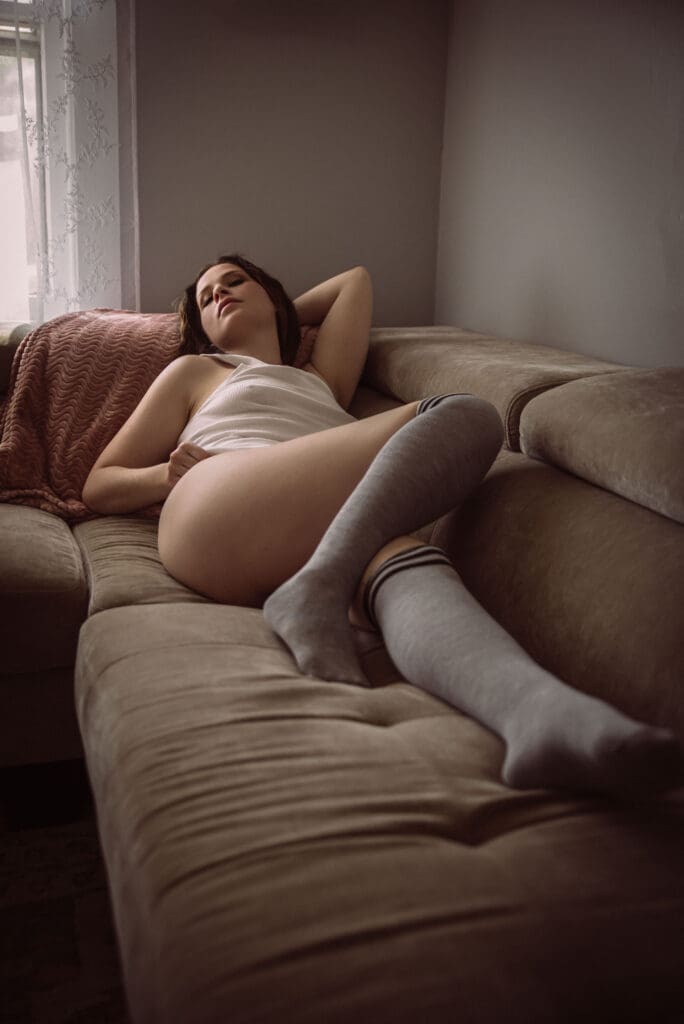
This is especially true when the photograph is intended to be more personal. A portrait asks you to be present in front of the camera, rather than simply appearing in the background of an event.
It asks you to allow yourself to be the subject.
That can bring up feelings that have very little to do with photography itself. Being seen, being noticed, and allowing someone to pay attention to you can all require a degree of vulnerability.
Sometimes, the hardest part isn’t knowing what to do with your hands.
It’s allowing yourself to take up space.
You Don’t Have to Know How to Pose
One common source of camera discomfort is the belief that everyone else knows what they’re doing.
You see photographs of women who appear relaxed, confident, and completely natural. You may assume they instinctively know how to stand, where to look, and what to do with their bodies.
But a photograph that looks effortless doesn’t necessarily mean the person felt effortless while it was being taken.
Most people aren’t accustomed to being professionally photographed. They don’t necessarily know how to pose, how to move, or how to feel comfortable with a camera pointed at them.
That’s not a personal failing.
Being photographed is a skill and an experience. Having someone guide you through it can make a significant difference.
A good photographer doesn’t simply expect you to arrive knowing how to pose. They help create an environment where you can relax, offer direction, and give you time to become more comfortable.
You shouldn’t have to figure everything out by yourself.
What If You Still Don’t Like the Pictures?
It’s worth separating two experiences that often get lumped together.
You might dislike the experience of being photographed. Or you might be perfectly comfortable having your picture taken but struggle with the images afterward.
Sometimes both happen.
If you consistently dislike photographs of yourself, it’s worth considering whether you’re evaluating those images through the same critical lens you use when looking in the mirror.
You might be searching for the features you already feel insecure about rather than taking in the photograph as a whole.
You might also be comparing a candid, unedited image of yourself to photographs of other people that have been carefully selected, posed, edited, and presented under ideal conditions.
Those aren’t equivalent comparisons.
Learning to look at photographs without immediately searching for flaws can take time. It doesn’t require you to love every picture of yourself. It simply means allowing an image to exist without turning it into a verdict about your appearance.
What Would It Feel Like to Be Photographed Without Having to Prove Anything?
Perhaps the most interesting question isn’t how to become better at posing or how to find your most flattering angle.
It’s what might change if being photographed didn’t feel like an evaluation.
What if you didn’t have to look thinner, younger, prettier, or more polished to deserve a photograph?
What if you could laugh without worrying about how your face looks? What if you could see an image of yourself and appreciate the moment before inspecting your appearance?
And what if you allowed yourself to be photographed even when you weren’t entirely comfortable with how you looked?
That doesn’t mean forcing yourself into an experience that feels overwhelming. It means recognizing that you don’t have to meet a particular standard of appearance before you’re allowed to be documented.
Photographs preserve pieces of our lives. They show us where we’ve been, who we were with, and how we experienced the world at a particular moment.
You deserve to be part of those memories, too.
You don’t have to become someone who loves every photograph. You don’t have to be naturally photogenic or completely confident in front of a camera.
You just deserve the opportunity to see yourself without immediately looking for something to criticize.
Sometimes, being photographed isn’t really about learning how to look better.
It’s about learning that being seen doesn’t have to be something you earn.


